When the first tracks appear on the snow, it means that hibernation is over. The hours of light you can count on to take some good photos are only a few. In fact, bears come out at dusk, and in April days are still short, but with the unfolding of spring many changes take place. In June the snow will give way to fields in full bloom and, in July, the midnight sun will shine and give a touch of warmth to the dark forest. Then come the August rains and finally autumn, with its striking colors, when animals seek to gain as much weight as possible before going once more into hibernation. Finland’s wild forests are the perfect place for observing their entire range of behavior during the year.


I’m travelling along the eastern shore of Finland, headed north. I’m crossing Lakeland along the famous Via Karelia route. The road, which in the ‘60s became a favorite among on-the-road tourists, gets its name from the land that encroaches on the endless Russian forests eastward. This is my fifth trip. If in past years I was able to land in the small airports of Kajaani and Oulu, at about two and four hours away, respectively, from my final destination, this year, due to Covid, many domestic flights were cancelled, so I landed in Helsinki and rented a car to take me all the 800 kilometers to Vartius, the border crossing station on the Finnish side of the Finnish-Russian border. During the ride I encounter only a few cars near residential areas, between which lie kilometers of wild forest. The more I move northward, the more vehicles I see equipped with Hella lights – auxiliary headlamps mounted in front of the radiator. Here, in fact, car accidents caused by moose and herds of reindeer in the middle of the road at night are a life-threatening danger. Good lighting systems on cars are a must. But this time all I get to see is a glimpse of a fox in the rearview mirror. As soon as I go by, it silently crosses the roadway. During the trip, with by now about a hundred kilometers between me and my destination, the last snow storms seem to want to resist giving way to spring. The sun is high and clearly visible behind the clouds, but the passing storms keep layering the road with snow. The studded tires have a good grip on cement, but it’s better to stick to the speed limit. In a few days everything will change: the sun will make the temperature rise enough to start melting the snow mounds, and the first blossoms will appear in the midst of the ice. It’s almost the end of April and, here in Finland, the brown bears are about to awake from their long winter sleep.


I’m only a few kilometers away from my destination when Juho, who is waiting for me at the hides – hiding places built on the ground that resemble hunting stakeouts, but not as safe as those built on trees, yet preferred for the purpose of photography, since otherwise the image would result flattened – calls to ask where I am. It’s 3 o’ clock in the afternoon and, for safety reasons, he advises me not to run late. To venture out on foot in the forest after 4 o’ clock in this season would be dangerous. Brown bears, in fact, except in the winter months when they are hibernating, are active 50% of the day. They move about especially at dusk and during the night in areas where they know they might encounter man; in more remote areas or when days become shorter, they are active even in daytime. It’s interesting to see the difference between the American bears, who seem to not care much about human beings, and those in Eurasia, who perhaps due to a long history of persecution at the hand of man, seem more careful and prefer to go about at night. The relationship between bears and humans dates back to a thousand years ago, when the search for food and shelter put them in competition with each other. Neanderthals left us drawings representing the cave-dwelling bears that used to live in Eurasia about 24,000 years ago, before the last glacial period. Research on gene flow between the cave-dwelling bears (Ursus spelaeus) and today’s brown bear (Ursus arctos) provides proof of a direct cross-breeding between the two species.
Today the brown bear’s nocturnal behavior will clearly limit my chances of getting him on camera. There are times of the year when I have at my disposal four hours to, hopefully, meet a specimen before the light becomes too dim for the camera; at other times, such as in the midnight sun season in July, the sun never sets. In general, if compared to the other bears, females with cubs are more active during the day, especially in spring, to keep their cubs from being killed by males seeking a mate. This phenomenon is called SSI (sexually selected infanticide) and I’ll discuss it later on. Young adults can have an intermediate behavior, being active also during the day. This would allow them to have access to food when the adults are less active. Nevertheless, during the first days of awakening from hibernation, which almost always represent the short lapse of time in which the photographer can get a shot of the brown bear on the snow, the specimens that come into sight are almost always males. The snow is still soft and very deep. The bears’ weight makes them sink down in that terrain which, once the snow melts, will give way to the taiga.
At dusk a male specimen comes out of the forest looking for food under the fresh snow. He carefully sniffs the blanket of snow and, if he scents something, will begin to dig.

Temperatures during the day are between 0 and 5 degrees Celsius, but at night, when I’ll be camping out to take pictures, they will go down to -10°C. The hide is built with wooden planks, a thin layer of styrofoam, a sheet of glass as wide as the length of the hiding place (about 2 meters) and approximately 4 fingers high, and under a broad opening covered only by some fabric in order to make it possible to slip the lens through and tie it up with a string. Insulation is very poor and having to stay still all night doesn’t make things easier. I’ll try not to keep my feet on the ground, to avoid losing body heat, and I’ll sparingly use for just a few minutes the gas burner that Juho will give me. I’ve got to make it last all night.When I reach my destination I take my suitcase up to my room at the lodge, I change, get my backpack ready with my camera and lenses, a thermos bottle full of hot water, some instant coffee and snacks for the night, then I venture out into the forest on foot towards my hide. Hiding places are located both at the center of the forest and in a vaster area surrounding three small lakes that right now are still frozen. For the first two days of the expedition I’ve decided to stay in the latter area, since in the woods the scarcity of light is greater and I don’t want to risk wasting days without being able to photograph animals due to lack of light. This time of year, in fact, is the hardest to plan out. Each year the climate changes. Some years the snow is still on the ground until mid-May, in others it melts at the end of April. Consequently it’s impossible to predict the behavior of the animals, who some years delay their awakening from hibernation in order to let the last snow storms pass, leaving the photographer empty-handed; other years the animals are already up and about weeks in advance because the temperatures are higher than normal and you risk undertaking a long trip only to find out, once you reach your destination, that the snow has already melted and given way to mud and rain, without getting the chance of shooting any good photos.
The brown bear is the most common species of Ursidae and, since it lives in a great variety of habitats, it’s not surprising to see how much its morphology varies as well: there are subspecies such as the brown bear of Eurasia, the Syrian bear, the blue bear, the Kamchatka bear, the Siberian brown bear, and the Kodiak and grizzly bears. Regardless of the subspecies, they are all omnivorous with a very varied diet. Bears are the largest animals within the order Carnivora. This order presents typical morphological characteristics, such as sectorial teeth: made to tear and grind meat when chewing, separating the tender meat from the tougher one. However, these teeth are undeveloped in the brown bear (unlike in the polar bear). Because of their size and the time spent in hibernation, they must consume an enormous quantity of food to satisfy their huge daily calorie intake. Even if they are the largest terrestrial carnivores, they feed mostly on plants, but consume meat as well, either prey or carcass, sometimes even killing other predators. The bear populations living in places with a lot of snow and low temperatures consume a lot of meat and less plants. If meat consumption is abundant in the tundra and in other areas with low temperatures, in the woods at temperate climates the opposite holds true. In northwest Russia, and, more precisely, within the Murmansk population, ungulates make up 21% of the bears’ diet, in Karelia 13%, etc. Even the season characterizes their diet: right after and right before hibernation their diet differs greatly. After hibernating there is an increased need of protein, and so their diet is mainly based on ungulates. In spring it’s easier to prey on young animals or find carcasses. In Eurasia the largest prey is the moose, but bears feed also on reindeer, European bison, and wild boars. Even small mammals such as squirrels and groundhogs can contribute a good amount of protein. In Kamchatka bears can take advantage of the enormous amount of salmon. In southern Europe even reptiles are a prey. But not here in Finland, since they are scarce due to the cold climate.
Large carnivores, such as bears and wolves, can play an important ecological role because of their dominant position in the food chain, since their predatory activity induces the population preyed upon to assume determined demographic and behavioral characteristics. On the other hand, competitive interaction between species, as well as a more horizontal competition between species at the same level of the food chain, can play an important role in the structure and stability of the population. As absurd as it may seem, competitiveness between carnivores can reduce the population. Brown bears and wolves sharing the same territory have caused a visible decrease in population growth of moose and reindeer.

But recent studies in Scandinavia have shown that an increase in moose fertility occurred the year following the loss of their offspring. In areas where they interact with man, bears also hunt domestic and semi-domestic animals: livestock can be represented by sheep, cows, goats and reindeer. In northern Scandinavia the conflict between man and bear becomes tangible in the case of semi-domestic reindeer , especially during the calving period in spring, when the newborn are easy prey during the first few weeks. Despite the number of calf losses being very high, reindeer farming, which boasts as many as 1200 years of tradition in Fennoscandia, holds a strong cultural significance. The Sami population has always protected their reindeer from bear attacks. A more precise estimate highlights the fact that the exact period in which the most reindeer are killed are the last three weeks of May. An attempt has been made to herd together the pregnant reindeer to allow them to give birth inside fenced areas, so as to reduce bear predation, but this practice, besides departing from traditional ways, has proven to be very expensive. Allowing bear hunting has shown to be a more efficient way to solve the problem.
Brown bears are among the major predators of newborn ungulates. This fact is interesting if we look at the interaction between brown bears and other large carnivores present in the same territory, such as canids and felines, who also prey on ungulates. Although any species of bear can potentially kill wild ungulates, attacks on adult specimens are not very frequent. Their size often doesn’t help them hunt, and even though it allows them to kill their prey with strong blows of their forepaws on the muzzle and neck, causing bruises and mortal fractures, the alternative of feeding on carcasses or other forms of food, even plants, is the preferred choice. This means that the density of the bear population, because of their omnivorous diet as well, can vary regardless of ungulate density. We say there is interaction between large carnivores when they share the same territory and the same prey. Bears are the largest carnivores and they have an unparalleled sense of smell, so interaction with other carnivores is almost always by way of cleptoparasitism: that is, when an animal steals prey from another carnivore. Different cases of cleptoparasitism have been observed in felines such as the lynx (observed in Croatia and Slovenia, especially when the female has newborn offspring) and in canids such as wolves and foxes all across the northern hemisphere. In Europe 20% of what bears eat is prey killed by wolves, in Scandinavia even up to 50-60%. Conversely, no cases have been recorded of wolves stealing the prey of bears. However, there have been cases of bears and wolves both feeding on the same prey killed by third party carnivores. Most of the information we have concerning interaction between bears and wolves comes from Scandinavia. Wolf predation should be bound to increase when wolves coexist with brown bears, since they have to hunt more to compensate the food lost to the bears’ cleptoparasitic behavior. However, recent studies both in Scandinavia and in Yellowstone Park seem to indicate that the coexistence of wolves and bears leads to less frequent killings. The reasons are still unknown, but it is likely that one of the species alters its approach in seeking food when this same food is sought by both. The presence of bears can alter the wolves’ time management: for example, in protecting a carcass by dragging it away to lower the chances of a rival finding it. We must remember that wolves hunt all year round, even when bears are hibernating.


A Wolverine runs over the frozen lake after making sure of the absence of bears around.
An example of cleptoparasitism that I was able to observe often in this desolated corner of the world can be seen when within the same territory bears coexist with the mysterious wolverines (Gulo Gulo). Often erroneously considered a species of bear –due also to the misleading English nickname of skunk bear – the wolverine, the largest member of the Family Mustelidae, is a carnivore common in the arctic regions of Europe, Asia and America. Its appearance is stocky and strong, with short, robust webbed paws that, quite differently from the brown bear, allow it to run on the snow without sinking: each paw has five digits, each of which is surmounted by a long curved semi-retractable claw. This area in Finland is one of the few places where this animal can be observed. Its behavior, in fact, isn’t set in a routine such as that of bears. They are extremely solitary, use urine, feces and anal gland secretions to mark very extensive territories (up to 1000 km² for males, no more than 350 km² for females, that are often comprised at least partially within one or more male territories) that they cover incessantly at the rate of 40-50 kilometers per day. Wolverines are cathemeral animals, meaning they alternate four hours of time awake and four hours of sleep in natural cavities or in simple burrows that the animal digs in the snow or in the ground; during the summer they show peaks of activity in the hours in which the sun is at its lowest. These carnivores feed mainly on small mammals, but are capable of killing deer and reindeer, and even the offspring of other carnivores, such as wolves. However, and this is where cleptoparasitism comes into play, their diet is heavily based on carcasses. If over the years I’ve seen many times bears wait for dusk to come out into the open, the wolverines I spotted would often beat them to the carcass they had scented. They are extremely fascinating and unpredictable animals, branded in old legends as devilish creatures. According to Sami tradition, it is forbidden to speak the name of this animal, because of its terrible gluttony that drives it to kill more than it needs.

A brown bear feeds on a small carcass found under the snow.
Reindeer in a field. It’s a local tradition to let reindeer free to roam all year round, making them migrate, and herding them together in fenced areas only for certain reasons as, for example, the culling of a limited number of specimens. Leaving the animals in their natural habitat improves their quality of life, but at the same time puts them in danger of falling prey to bears.


This medium-sized male has a deep scar on his muzzle: the result of a fight with older bears when he was younger. Speaking with other photographers who I found out to have shared the same subject with, I discovered that this bear lives in this area and is every year one of the first to emerge from hibernation. However, when other older specimens start to move about in this same area, he goes away and is not to be seen until the following spring.

Brown bears usually limit their roaming to a precise area during the year, and this territory has to satisfy food requirements and the need to find a mate. Bears are solitary animals, but not territorial ones, and so two specimens could live in the same area without ever encountering each other. Adult females keep to the same area for several years. Females usually live in smaller areas than males and may overlap those of other females, particularly those with whom they are related. Daughters usually spread out within their mother’s territories. This happens because among related females there is a sort of tolerance. When food is very abundant, such as in the case of the salmon in Kamchatka, it is normal even for bears to be more tolerant with one another and to have smaller territories (6-15 km²). Conversely, in the Gobi desert a bear can have a range of up to 2400 km², due to scarcity of food. In Europe, and particularly in Scandinavia, bears have territories that range from 160 to 640 km². Females with cubs cover smaller distances in the south compared to those in the north because it is easier for them to find food. It is generally known that in North America the grizzly bear can be more aggressive than the lowland brown bear due to scarcity of food at its disposal. When food, both prey and plants (wild berries, pinecones, etc.), is found in lesser amounts the range of action increases. When wandering about, bears rest at least once or twice a day, taking care to never use the same spot to rest, to be safer from humans.

In the hide I look out onto the desolate landscape. A bear has just disappeared at the far end of the forest. The only ones who still linger are the crows. As the sun is setting behind me and the shadows of the firs stretch over the iced lake, before me the last snow storm is stirring up. More than five months have passed since the bears have gone into hibernation, a length of time during which they have relied on their store of fat accumulated during the fall, sheltered in abandoned burrows, under fallen trees or roofs of stone. With the exception of polar bears (Ursus maritimus), brown bears are the largest of bears: some of the greater specimens can reach the size of a large polar bear. Their size depends a lot on the quality of the food they find. The largest bears in Eurasia are those of Kamchatka, where salmon abounds. A study on bears in Europe has shown very little difference in size between the bears in Sweden and Norway and those in Croatia and Slovenia. In both cases, males are twice as big as females in spring. Instead, in autumn, the increase in size in the bears up north is much more visible than in those down south, since hibernation in the north is longer and the climate harsher. Despite these estimates, I can say to have witnessed the presence of male bears weighing even 400 kg.


Around the second or third week of May the snow starts to melt and in a few days the green vegetation of the taiga starts to appear again, the great expanses of white hint at the presence of frozen ponds hidden under the snow, and the sun becomes warm amid the forest trees. The greenery is dull-colored, there’s mud all around, and the wooden planks placed on the ground to help reach the hides often bend in the middle, threatening to get my hiking shoes wet. The days start to lengthen. The time limit for reaching the hides has now changed to one hour later, and the behavior of the animals is changing as well. In the afternoon the sun starts to warm up the air and the white flowers suddenly blossom. By now even the female bears with their young have come out of hibernation and wait for the sun to set in order to leave the forest and venture out into the open.

Male bears live in vast areas that can extend up to 1000 km² and that can overlap the territories of other males and females. The brown bear is polygamous, since both sexes can have different partners during the love season. Adult males can be double the size of females. Mating season begins in spring and lasts until early summer. The exact period, though, varies depending on the population. In some cases mating has been observed even in autumn. During the mating season, both males and females wander around in search of a partner. Male bears keep track of the females’ estrous cycle through their pheromones. Bears communicate by marking tree trunks or objects to signal their presence and to communicate their reproductive state. This behavior is to be seen as an indirect social interaction. In populations in which many specimens gather together around a source of food a hierarchical approach can develop, in which the dominant animal prevails in the mating season over the other contenders. There is, in fact, great competition for the females, to the point of inflicting one another serious wounds or even death. The rivalry can continue even after birth of the cubs: SSI (sexually selected infanticide), mentioned earlier, is a reproductive strategy by which males kill the offspring of other bears in order to get the female back in heat. This is one of the reasons why females have to choose between two options: select the best male or mate with several males to reduce the risk of infanticide, since sexual promiscuity can make unclear who sired the cubs. SSI in brown bears can be responsible for up to 30% of cub mortality every year. Sexual maturity and the female’s first pregnancy arrive in Eurasia at about 4-5 years of age, in America 2-5 years later. In Europe females have been known to give birth even at 3 years of age. Birth takes place after 6-8 weeks of gestation , between January and February, during hibernation. One to three cubs are born, but litters of six can occur. Maternal care may be provided for even three and a half years, but sometimes it comes to an end in half this time. The period of time the cubs spend with their mother is essential to teach them to recognize food and defend themselves from potential predators. This education is at the base of the cubs’ future behavior. In all mammals the first births show a lesser reproductive performance compared to later births: in bears the first birth yields small litters and a high loss of cubs. The interval between one pregnancy and the other varies from one population to the next. In Europe, generally, this interval is of two years. The number of cubs, their size and their survival depend on different factors, but usually they weigh 650g – both males and females. During the nursing phase their growth rate is slow, but as soon as they start to eat on their own it undergoes a significant acceleration: at 15 months they weigh between 16 and 23 kg and every following year they can gain 10-15 kg per year, until the age of 15. They will reach 90% of their adult weight in about 5-6 years (for the females) and 8-9 years (for the males). The average weight is 90-140 kg for the females and 200-245 for the males. Access to the females, and therefore reproduction, seems to be easier for older males, perhaps because they hold the advantage of being larger in size. Those specimens that roam around more have a more diurnal behavior. Habitat, as well as abundance of food (see the Kamchatka bears), affects the reproductive level of a species remarkably. The ideal habitat is characterized by territories with good food and safe shelter for resting, raising cubs and hibernating. Brown bears often live in extremely vast forests, yet they can use open land such as steppe or farm fields where wheat, corn and other grains are grown. This brings them directly in contact with man, increasing the risks for both. If in Italy, Spain, Greece, Turkey, Iraq and Syria bears can live in Mediterranean forests interspersed with meadows; at high altitudes, such as Nepal, Mongolia, Turkey, India and Kazakhstan they occupy temperate fir forests; in Scandinavia and in Russia they live in northern type forests and in the taiga. The bears that I manage to photograph here are cross-border specimens from nearby Russia. While in Finland the population of 1600-1800 specimens is considered stable, in Russia the population of 225,000 is growing. Summer is now just around the corner, the snow has surrendered to vegetation, the dry grass of last autumn has come back to life, and eriophorum flowers –called cottongrass because of their soft appearance similar to cotton- have by now inundated the subarctic region. Between June and July temperatures vary from 5 to 30 degrees Celsius. This is also the midnight sun season.
Because of the earth’s axial tilt, at latitudes higher or at least equal to the Arctic Circle, it so happens that in between the two equinoxes (March 21 and September 23) the sun can rest on the horizon instead of setting; this happens every semester in alternation between the northern and southern hemispheres. At the latitude of my current position this happens by letting the sun touch the horizon before it starts to rise again. If in other regions, such as the Norwegian coast, it is possible to see the sun hang steadily just over the sea. Here, in whichever direction you look, the horizon is clad in boundless forests. During the night, at the peak of the midnight sun, the sky often becomes pink, orange and yellow, and the outline of the forest hides the animals within its deep shadow. To shoot during the midnight sun can be a double-edged sword: if, on one hand, the hours of light that are good for working are plenty (perhaps even too many), on the other hand I’ve noticed how bear behavior is less predictable. There are nights when the hungrier specimens start to come out of the woods as soon as late afternoon, as they do during the rest of the year, and other times when they wait until late evening before showing themselves. So the photographer, besides having to stock up on patience and instant coffee, risks not seeing any animal until very late and, even if the sun shines as if it were day, the animals remain cloaked in the shadow of the forest and sometimes in the fog that rises from the lake.


A photo of a bear and a seagull shot at 11:45 p.m. The sun is still high in the sky and seems to set just behind the forest, without ever disappearing below the horizon.

A young light-colored adult peers out towards the lake. It knows it’s late and that there may be adults nearby. I’ve been watching it do this for a few days now. Its golden fur is like a lit lantern in the darkness of the forest. However, that was the only night it ventured out far enough to be caught on camera.


A brown bear and a wolverine share the same territory a few hours apart.
The brown bear and the cave bear went different ways in Eurasia about 1.2-1.4 million years ago. Several studies carried out in the ‘90s on a few small bear populations in Europe, research based on mitochondrial DNA sequencing, resulted in the identification of two main lines of progeny: the western one and the eastern one, which developed separately about 514,000 years ago. The western one forked into two clades: types 1a and 1b. The first type, 1a, found shelter from glaciation on the Iberian Peninsula, from which it later migrated northward, conquering northern Europe, Britannia, Ireland and southern Scandinavia. The second type, 1b, took over the Italic Peninsula, protected by the Alps, and then the Balkans, the Carpathian Mountains, and Turkey, where type 3a was also present. When clade 1b started going north, Europe was almost entirely inhabited by 1a, therefore they were almost always kept out. During the Last Glacial Maximum (LGM), meaning when ice sheets were at their greatest extent during the Last Glacial Period (20,000 years ago), some bears survived in the tundra of central Europe, in a habitat similar to the arctic one, where American brown bears live today. Today the brown bear is the most popular species in the world, and can be found throughout North America, Europe and Asia. The species became extinct in North Africa approximately in 1500 in Egypt and in 1800 in Morocco and Algeria. In Europe it disappeared from various places due to the pressure made by human presence and climate change. Today Russia boasts the largest number of specimens (an estimated 225,000). Various smaller and more isolated populations occupy the southern and western territories, such as in Abruzzo and on the Pyrenees, but also in Turkey, Iran and northern Iraq. The most isolated brown bears are probably those living in the Gobi Desert in Mongolia.

This bear halts upon hearing the sound of a rival approaching from behind.
A few years ago, during an expedition in mid-August, I was in a hide facing the forest. I had already tried to reach it the day before, but the presence of a large male in the valley had forced me to give up going into the woods and so I tried again the following day. For my second attempt I decided to anticipate my schedule, so as to not risk finding the bear along the narrow trail that starts in the open area near the lakes –where the broad view had allowed me to detect the bear in the distance and find shelter without having to go near him– and leads to the hide in the middle of the woods. This time I was lucky. I got myself into position, mounted the 300mm lens on my camera and began to wait. Not long had passed when, at about ten meters away, I caught sight of a large male on a mass of stone at the edge of the forest. I began to take shots in silence mode, but the Canon 5d I used to use back then would make a light mechanical shutter sound. It was, however, a sound that bears seemed to ignore (contrary to the wolverines, always alert and suspicious at the slightest noise). The bear, standing still on the stone, was lifting his nose to sniff the air for food, or perhaps something else. A few seconds later another male ran into him and both disappeared behind my hide, from where unfortunately I had no view, but the sound of their growling was loud and I could hear their massive bodies crashing into the trees. If their fight –perhaps due to a female, despite it being almost the end of the season– had taken place against my shelter, this would probably have been blown to pieces in no time. As we said earlier, two bears, either of the same or different sex, can occasionally share a territory, but being solitary creatures, it’s rare to see them interact.


In August the colors change, the flowers that filled the taiga have vanished and the tall grass starts to become yellow. Then comes the rain.


A young bear, who has just recently started living on his own, comes out of the forest late in the afternoon and shyly crosses the open land. He knows that the adults will come out later towards dusk, so he tries to anticipate them to search for food.

The brown bear is characterized by a disc-shaped face, a heavy body, and a hump on its shoulders, long claws, although shorter than those of North American grizzly bears. The bear’s head is massive with a big nose, round ears and small eyes. Despite its name, brown bears can be of different shades of color: brown, golden, or almost black. The fur is made up of three types of hair: those that constitute the underfur, short and thin that provide thermal insulation; those that consist in guard hair, long and thick and that make up the outer fur; and those that are in between the two. The bear’s height at the withers can be anywhere from 75 to 120cm, and the length of the body from 130 to 250cm. Towards the end of August these animals are very active and become more and more so until their next hibernation. This is the time when males and females try to gain as much weight as possible. Body mass can increase up to an additional 30% of the weight they had in their hypophagic phase in April. Any source of food will do, because during hibernation they will only be able to count on the fat they’ve gained to sleep and, in the case of females, to face labor and nursing. During hibernation their body temperature lowers, heart and breathing rate decrease dramatically and, consequently, brain activity as well. It may occur that they wake up and, once in a while, leave their den, but in the north it’s rare for bears to remain active all winter such as those in more temperate climates. The duration of hibernation can vary from specimen to specimen, based on their age and their reproductive state. From my observations, brown bears generally begin to prepare for hibernation two months in advance, speeding up nutrition. They will enter the den at the start of the first snowfalls -or immediately after- when temperatures are around 0°C. If in April the best sources of protein are the carcasses of ungulates and hunting their offspring, now plants and fresh berries are an excellent addition to their body mass. Bears play important roles in the ecosystem: besides being “street cleaners” of carcasses, together with other species of large carnivores they contribute to regulating the herbivore population, preying on young ungulates and insects. Also, in regards to plant life, they help the dispersal of seeds; in fact, they help scatter seeds of different species, carrying them in their fur and in their feces.


Plants are part of their diet: green grass, seeds, leaves, tubers, and all those berries that are available for a brief amount of time, especially in autumn, before hibernation.
Nallikari beach, Oulu. Beginning of May. The frozen waves cover the shore, while out at sea large ships move slowly at sunset.
Once landed in Oulu, I grabbed the chance to go back to the famous Nallikari Beach, a long beach north of the Gulf of Bothnia. The first time I came here it was in the beginning of May and the waves of the ocean were still frozen, forming white slabs on the damp and dark snow. The ice-cream kiosks were to remain closed for yet another month, and the walk was enlivened now and then only by solitary runners with heavy rain jackets. Now we’re at the end of September and even before landing I can see the warm colors of the forests and crystal-clear lakes. I stop to sleep a few hours, then at dawn I’ll set off for Vartius, where the guys at the lodge will be waiting for me to give me my equipment before starting my night watches. In this season the temperature is around 0°C, with sunny days that reach 10°C and that at night go below zero. The sun sets towards 8 p.m. and rises around 6 a.m. The brown bears’ rate of activity is hectic and the way in which they are sharing the territory is something never before seen. They can feel that it won’t be long until hibernation, therefore they must take in as much food as possible. I drive for about 4 hours in the forests of Lakeland, heading east. When the road signs start to indicate Vartius and the Russian border, I know that I’m almost there. I turn in a dirt road on the right and I reach the hidden lodge.


I’m walking into the forest with my equipment on my shoulders, trying not to make noise, heading towards my hide. The vegetation, green in summer, is now golden. The water of the surrounding lakes is perfectly still and reflects like a mirror. It’s 4 p.m. At this time of year, due to the activity of bears, it’s a good idea to anticipate any trips on foot by at least one hour. Despite doing this, I haven’t yet reached my hiding place when I see a large, probably young, male already on the shore of the lake in front of me. I stop in the attempt to silently get my camera out of my backpack, but the bear’s sense of smell is highly developed and, as soon as he becomes aware of my presence, with a leap he darts away into the safety of the forest. That’s ok. If on my first autumn walk such an opportunity arose, I can cross my fingers and hope to gather an excellent amount of material in the following days. And indeed I will not be disappointed. The very first evening I get to see another specimen wander in the taiga. I think this is the best season. I stay in the hide to look at the landscape. Now and then the crows caw, but the silence is particularly impressive. Ari, the owner of the lodge, once told me that in autumn it’s possible to hear the mothers communicate with the young, warning them of possible danger. Perhaps you can’t see them, but the group is close by and you hear them. The sun slowly sets, so I withdraw my lenses from the hole, I pull the piece of fabric over it to prevent the cold autumn air from entering and I lie down in my sleeping bag on the cot behind me. By now it’s dark, I have no view, but I hear the sound of something moving in the swamp close by. The bears are very active. Perhaps I’ll get the chance to catch sight of a few of them at dawn, before returning to base.


A young brown bear that has just started to live on its own wanders in the fog.

A very active fox, despite it not being an animal about to hibernate.


It’s one of my last evenings here, the temperatures keep falling, there’s much humidity and suddenly an extremely thick fog rises from the lake, enshrouding the entire forest. View is very scarce, but all of a sudden I hear a deep growl a few meters from me: a male with a remarkable hump and some trouble with his left eye…perhaps caused by a fight with another male. He comes close to me, dripping swamp water as he moves, and sniffs the air. The fog confuses smells, but this doesn’t worry the dominant specimen too much. He comes almost next to me, passes me by, and at a fast pace disappears again into the forest.


Amazingly, a few minutes after the male bear walks past me, I get a glimpse of something light-colored moving in the forest in front of me. At the beginning it looks like it’s only a stone mass, but then the vertical movement leaves no doubt. It’s a female with golden fur that lifts its muzzle upwards to check if the male is still there. She hesitates for a while, then she plucks up her courage and makes way for her four cubs.


The last day of my expedition I sight no animals, but I’m satisfied. In the previous days I gathered material far beyond my expectations, so I just stay and look at the scenery in the unbroken silence of autumn, far from everything, under a clear sky, uncontaminated by airplanes. This trip brings to an end a project that started in 2017 and progressed until 2022, slowly constructed, piece by piece, alternating trips that yielded scarce results because of the unpredictability of animal behavior with others that turned out particularly productive, such as this last one. By now it’s completely dark, so I put my equipment in my backpack with the help of a flashlight and I slip into my sleeping bag to rest. The following day I’ll have breakfast and then I’ll have to leave immediately for Oulu in order to not miss my flight. Just then, right nearby, I hear a creaking sound.
A sound that in any other season I would have attributed to some nocturnal bird, but not in autumn. I take a look through the crevice, but the night prevents me from seeing anything. There’s no moon in the sky, and yet that noise is just a few feet away. With my previous cameras I would have given up without even attempting to take a shot, but my new R5 is capable of shooting at night and has a color range of outstanding performance, so I decide to get it out again from my backpack as silently as I can. I mount the most luminous lens that I have with me, my 85mm 1.2 and I turn the ISO up to maximum. I don’t plan to take any shots, but rather use my camera as a night binocular. At 5 or 6 meters from me I see a bear crouched down chewing on what is likely a root or a bone. For the first time an animal is not just passing by, but is actually lying still before me. And at that point, free-handedly, I take a shot with an extremely long exposure in the attempt to acquire all the light available, a photo that reminds me of that paragraph of “The Blue Bear” by Lynn Schooler, that talks about a lousy photograph in which “the light is flat, the focus blurred, its elements weakly composed -yet I number it among the most precious of my material possessions.”This is the gift that nature bestowed on me on the last night of this expedition. Right after taking the shot, I put my camera away and just lie down listening, in the ever darkening night, to the sounds of that friend just a few feet away.
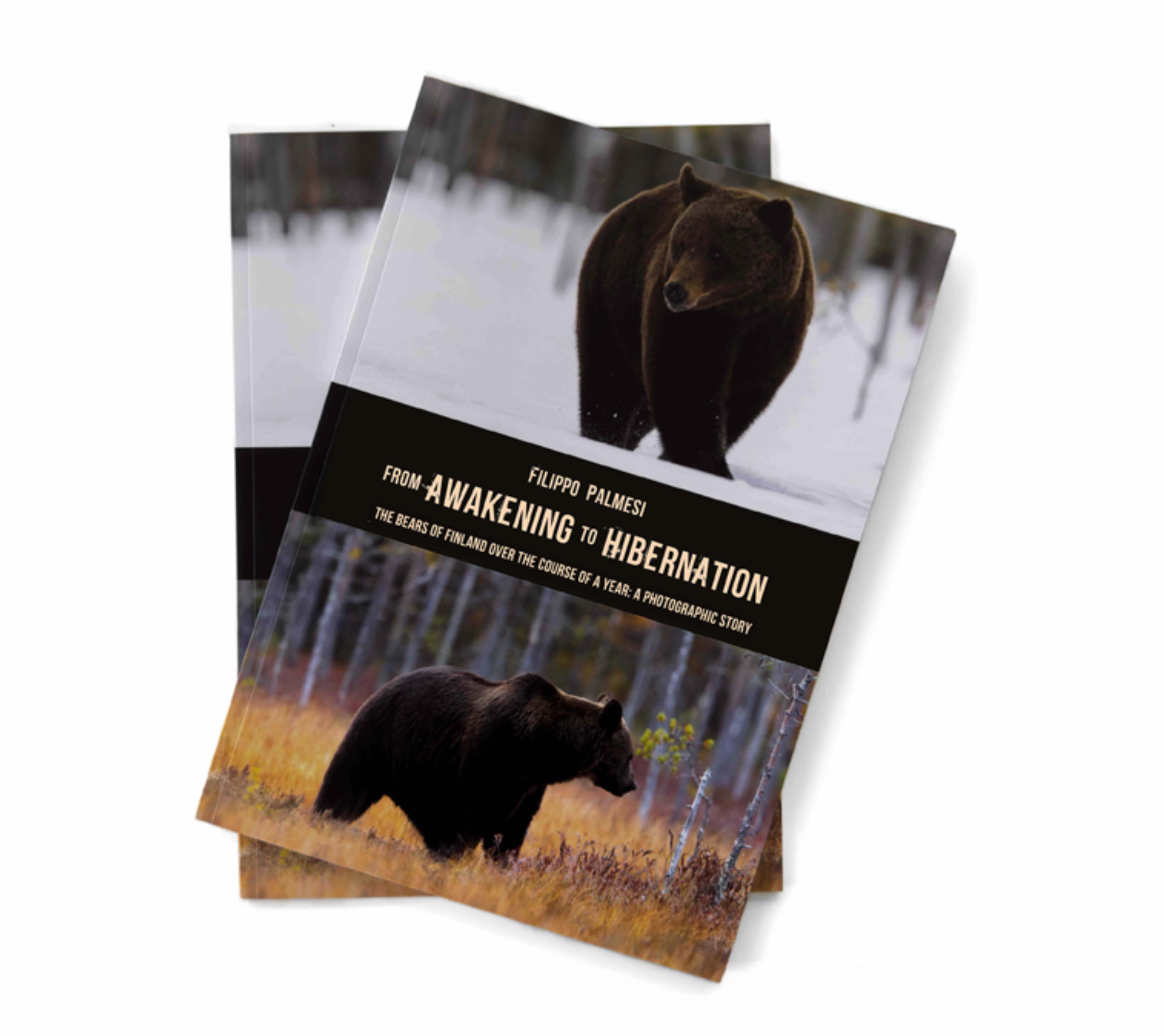
Story and pictures by Filippo Palmesi